

 LinkedIn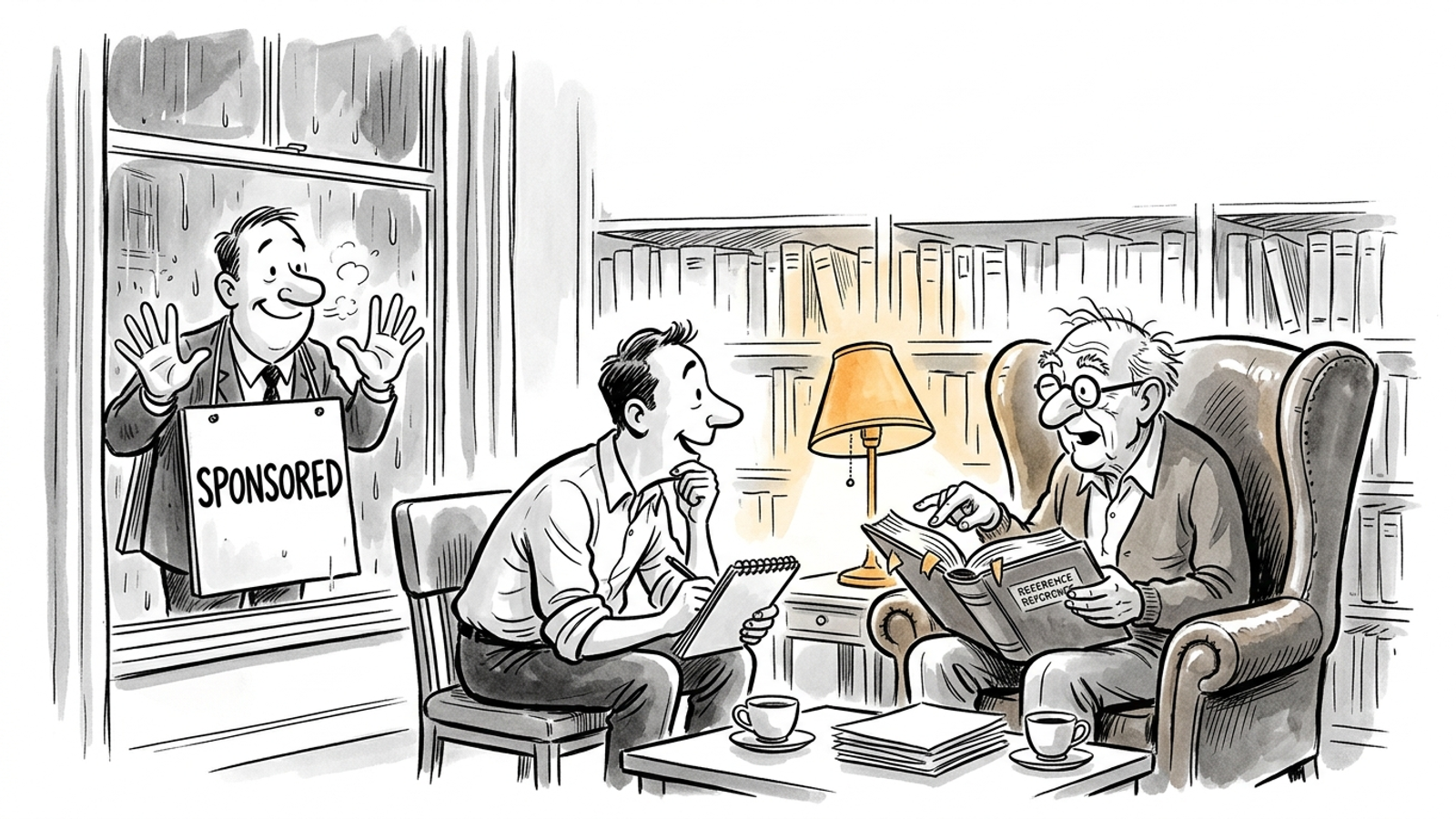
The Question: Buy the Ad or Earn the Citation?
An ad beside an AI answer can bring in a buyer this month. A citation inside that answer can help decide which vendors the buyer considers at all. Which one deserves the budget? Smart operators disagree because paid placement offers speed and measurable conversions, while earned citations can shape the shortlist without a charge for every click. My answer is to buy the ad for revenue-now queries and earn the citation for shortlist-forming questions. Most businesses have that split backwards.
This is no longer a hypothetical argument. Google runs text and Shopping ads inside, above, and below AI Overviews across more than 11 English markets, while OpenAI has expanded sponsored links and product cards in ChatGPT across commercial categories. Meanwhile, Ahrefs tracked 300,000 keywords and found that an AI summary coincided with a 58% drop in organic click-through rate for the top-ranking page. I understand why that makes a marketing lead with a weekly pipeline target nervous.
The real disagreement is about where the decision happens. If the buyer treats an AI answer as advice, an ad beside it may sit outside the room. If citations can disappear after a platform update, staking this quarter’s pipeline on earning one is reckless. Both sides deserve their best argument before either gets a rebuttal.
First, Know What Each Placement Buys You
A paid slot comes from the broader ad auction
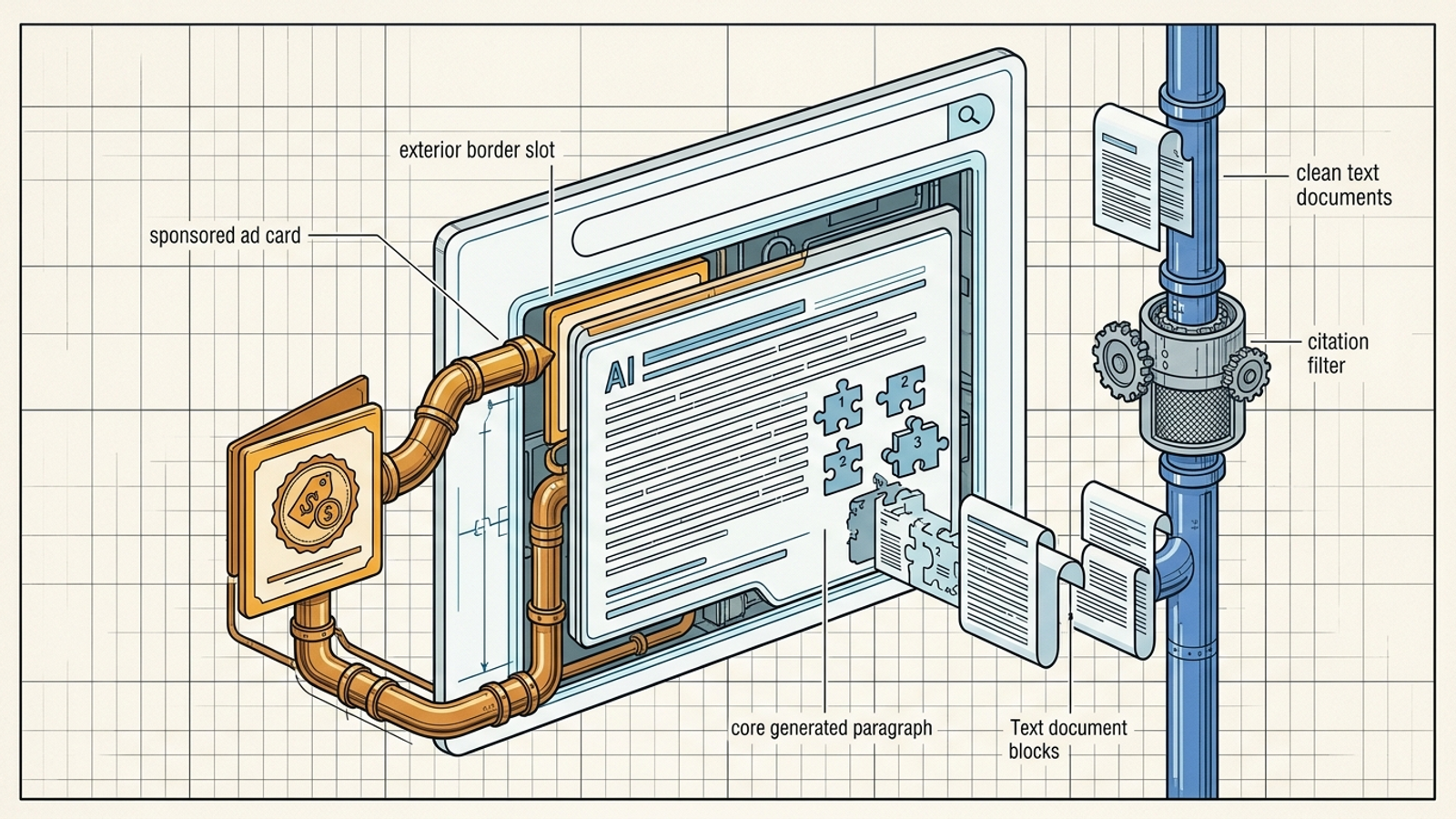
You cannot buy a neatly packaged piece of digital real estate labeled AI Overview. You bid through the standard Google Ads auction. Google can serve text and Shopping units inside, above, or below the generated summary, using assets from Search, Shopping, or Performance Max campaigns. According to Google Ads documentation, eligibility for these placements involves broad match keywords or AI Max settings paired with Smart Bidding.
That distinction matters. You cannot put AI Overview placements in their own clean ad group, give them a dedicated bid, or inspect their performance in an isolated reporting column. You pay into the broader auction, and Google decides whether your ad belongs near the generated answer. In ChatGPT, commercial queries can trigger sponsored links and product cards beside or below conversational answers. In either interface, the ad is an attachment to the response, not a source the response relies on.
A citation has to earn its place in the answer
Organic citations work through a different mechanism. Generative engines retrieve and select passages for relevance, usefulness, and clarity. Your page is competing with other published material to help answer the question, not with another advertiser’s target CPA.
Research from BrightEdge tracking AI Overviews found that 54% of cited domains overlap with page-one organic results, while only roughly 17% of cited sources come from the traditional organic top 10. Page-one visibility, in other words, does not guarantee a mention. A generative engine optimization study by researchers at Princeton, Georgia Tech, and IIT Delhi found that changes made for generative retrieval could increase citation visibility by up to 40%; adding specific statistics improved citation frequency by 41% in its tests.
A cited page can become part of the material used to construct an answer. That is a different job from placing an ad nearby, and it calls for a different kind of investment.
The Case for Paying: Pipeline Will Not Wait
Launch quickly, then measure what converts
The strongest case for paying is not that an ad makes you authoritative. It is that paid search gives an operator a way to act now. Set up a campaign for high-intent commercial terms with adequate budget, and ads can reach active buyers within hours. I can see click costs, follow conversions through a CRM toward closed-won revenue, and adjust budget when capacity changes. None of that guarantees a profitable campaign. It does give me levers I can pull this week.
Earned citations offer no comparable schedule. I cannot forecast how often ChatGPT will cite a whitepaper next Tuesday, and I cannot call an algorithm support desk if a competitor’s article replaces it. If the business needs qualified pipeline this quarter, waiting months for reworked content to be discovered and cited is not much of a plan on its own. I have managed accounts where tomorrow’s demand mattered more than a beautiful six-month visibility chart. The chart did not make payroll.
Paid also handles a specific defensive problem. If a well-funded competitor starts bidding aggressively on your brand or core category terms, you can launch a counter-campaign without waiting for the next crawl or answer update. You can test headline variations and value propositions, see which messages produce qualified conversations, and use those conversion signals to guide the campaign. Try to run the same controlled test through organic AI citations: the engine may rewrite its answer, surface another vendor, or stop citing you, without explaining what changed.
This is the paid side’s best point. A revenue team is judged on customers, not on whether an assistant thinks its technical guide is useful. When the buyer is ready to transact, speed and attribution beat the prestige of being cited.
The Case for Earning: The Shortlist Forms in the Answer
The ad sits beside the advice
The earned side starts with a distinction paid search people are tempted to wave away: an ad beside the answer is not the answer. When someone asks an assistant to compare software, diagnose a bottleneck, or identify a specialist, they are looking for help sorting the options. A sponsored tile may be visible, but the buyer knows why it is there.
A study of 796 searchers reported by Forbes found that AI Overviews reduced recall of organic sources from 76% to 56%. It also reported that recognition of Sponsored labels rose from 41% to 61% when those labels appeared around AI summaries. Buyers can notice the paid unit without treating it as part of the answer’s evidence.
A citation makes a different impression. If your data, explanation, or comparison helps form the response, the buyer encounters your work while evaluating the question itself. That does not guarantee a click or a sale. It does put you closer to the moment a shortlist takes shape, rather than asking an ad to interrupt it.
A useful page does not pay for each appearance
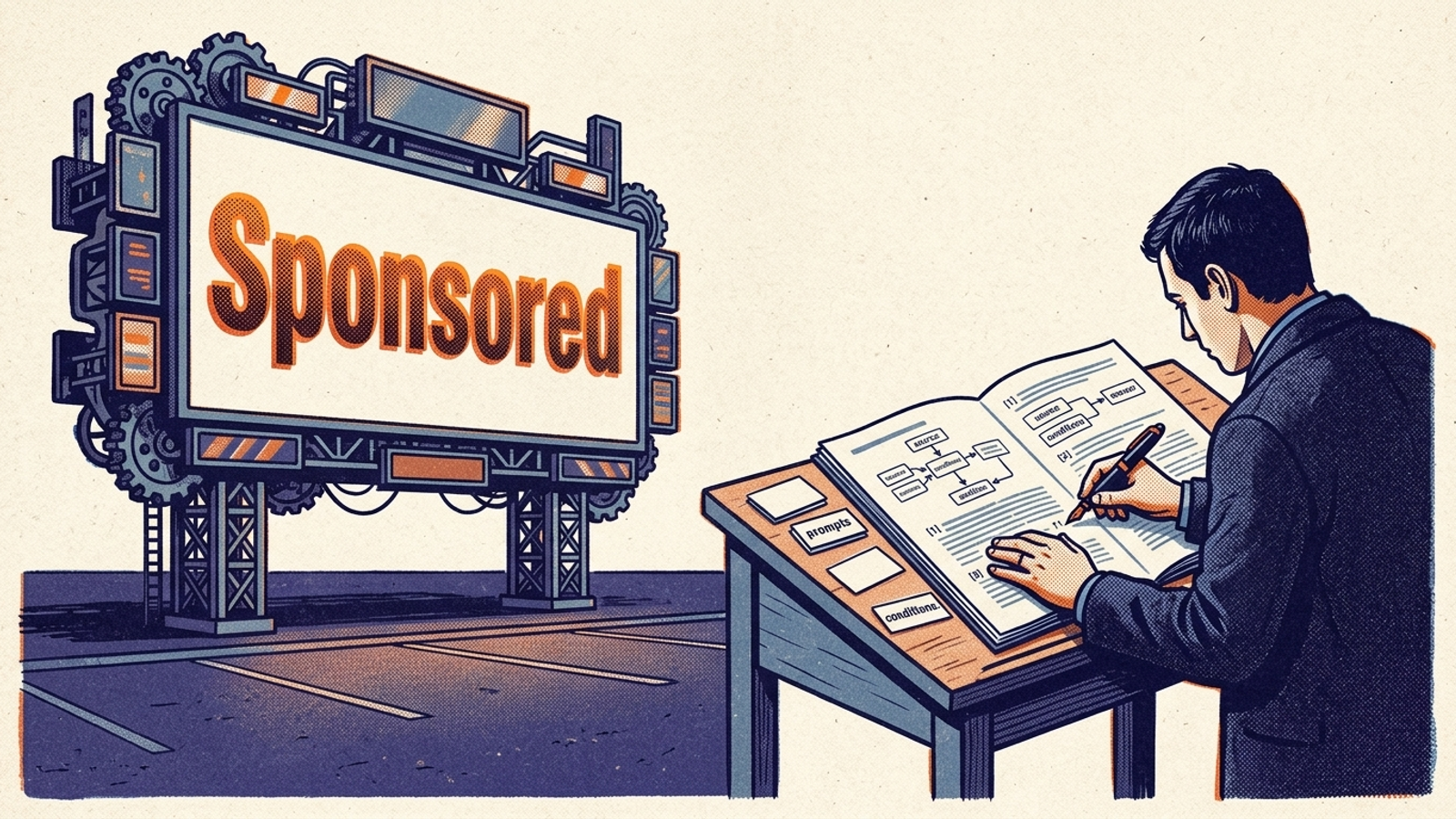
The economic case matters too. Every paid click has a price. In competitive categories such as B2B software, commercial legal services, and home improvement, CPCs can reach $30 to $100. Pause the campaign and that paid stream stops. A useful page, by contrast, can be cited across many related buyer questions without a separate ad charge each time. It takes work to create and maintain; zero marginal ad spend is not the same as free content. But it does not enter an auction for every appearance.
Consider Perplexity’s retreat from sponsored follow-up questions in early 2026 after the format brought in $20,000 against $34 million in total company revenue. I would not turn one platform’s decision into a law of AI search. It does, however, expose the tension: an answer engine asks users to trust its response, while a sponsored placement has a different reason for appearing.
That tension becomes expensive during vendor research. A software buyer asking an assistant which enterprise payroll platforms fit mid-market manufacturing wants a comparison, not just a tile at the edge of the screen. If your brand never appears in the synthesized discussion, an ad may not get you onto the evaluation list. This is why six PPC instincts that won’t earn you an AI citation matter: treating an LLM like keyword bid matching misses the factual questions buyers use to narrow their choices.
The earned side is not arguing that citations replace sales. It is arguing that the buyer may choose whom to consider before a paid click is even available. For those questions, a useful cited source does work a banner cannot.
Where Both Arguments Break
The paid case weakens when an operator claims more control than the platform provides. Practitioners in r/PPC discussing AI Overview placements describe the frustration of broad match and automated bidding without a clean view of where an ad ran. If a click costs $45, you cannot simply read an isolated AI Overview column to find out whether it came from that placement or a standard search listing. Nor can you set an independent bid ceiling for AI inventory. You can measure the broader campaign’s business results; you cannot pretend every part of that campaign is neatly auditable.
The earned case breaks at the opposite end: visibility is not a revenue timetable. No platform promises to keep citing your page. Retrieval changes or crawl problems can remove it, and even a citation may produce no site visit if the assistant gives the buyer enough information in its own answer. If the business needs 40 qualified demo requests this month, an expanding collection of citations is not a substitute for demand capture. I would not take that plan into a pipeline meeting.
These are not small objections to smooth over with a slide about synergy. They tell us which job each channel can do without pretending to be the other.
Verdict: Use the Two-Bucket Rule
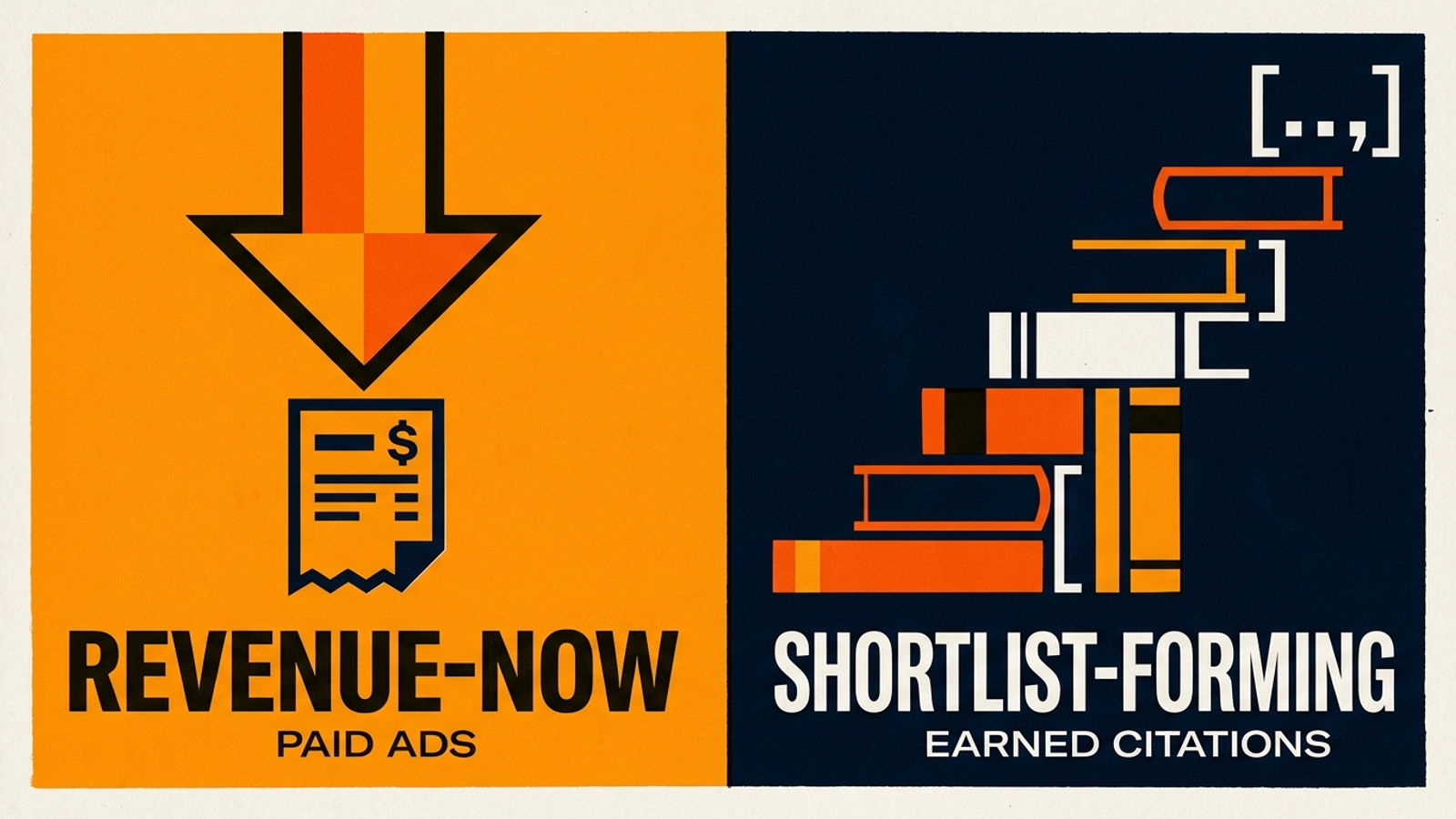
My ruling is simple: buy the ad for queries where you need attributable revenue this month; earn the citation for questions that decide who gets shortlisted. The consideration that decides it is buyer intent. Is this person ready to contact or buy from a vendor, or still deciding which vendors belong in the conversation?
Most businesses reverse that allocation. They spend on vague informational searches while buyers are researching, then leave the comparison and diagnostic content thin when an assistant is assembling a shortlist. They pay for attention too early and fail to earn a place in the answer that matters.
Revenue-now queries: buy the chance to convert
Think pricing for emergency commercial refrigeration, SOC 2 compliance software demo, or hire trademark attorney in Chicago. These searches signal a buyer looking for a price, a provider, or a next step. Paid placement can put an offer in front of that buyer quickly, send them to a matching landing page, and let you measure the resulting conversion. If an AI Overview appears, the broader ad auction may also put your asset near it; that placement is not something you can demand separately.
I would not wait for an uncertain citation to do the work of a campaign on terms like these. Give the ready buyer a direct route to the transaction, then judge the spend by qualified pipeline and acquisition cost rather than by impressions.
Shortlist-forming questions: earn a place in the research
Now think how does vendor A compare to vendor B for HIPAA compliance, what is the average cost to replace an industrial chiller, or what are the hidden fees in third-party logistics contracts. These buyers are sorting risks and alternatives. A paid pitch does not answer the underlying question as well as a clear comparison, data table, or technical explanation can.
Build material an assistant can use and a human would trust. Show the numbers behind a claim, explain the trade-offs, and make the answer easy to find on the page. The goal is to belong in the evaluation, not to buy a banner beside it. That is the job of the earned bucket.
Put Your Top 20 Buyer Questions in the Right Bucket
Pull the top 20 queries and sales inquiries tied to attributable pipeline over the last two quarters. Skip the raw-click leaderboard. Look for the questions behind qualified sales conversations, then sort them by what the buyer was trying to do:
- Revenue-now: The buyer seeks a specific vendor, price, demo, or booking. Route these to paid search with target CPA guardrails and landing pages that match the intent.
- Shortlist-forming: The buyer compares options, diagnoses a technical problem, or evaluates a service model. Stop treating these as automatic paid-keyword targets. Build useful comparison assets with verifiable numbers, and run a 45-minute check that ChatGPT and generative crawlers can read your site.
Traditional agencies often put paid and organic search in separate silos, then review the work on separate schedules. One team buys clicks; another publishes posts. The buyer does not move through those silos. The same question can begin as research in an AI answer and end as a commercial search. If nobody owns that full path, budget goes toward broad queries that produce activity without qualified pipeline, while thin content fails to help form the shortlist.
That is the operating model groas is built to replace. Its specialized AI models work continuously across paid and organic search, including bidding, targeting, budgets, content, and optimization. A named human strategist sets direction and guardrails and remains accountable for the business outcome. The flat monthly fee avoids a percentage-of-spend markup. The point is not to buy every appearance or to wait patiently for every citation. It is to put each buyer question where it can do the most work.
Stop paying an agency to debate buy versus earn while the buyer moves on. Buy the ready transaction. Earn your place on the shortlist.