

 LinkedIn
A page that earns a Perplexity citation may never appear in a ChatGPT answer. For a growth lead choosing between ChatGPT, Perplexity and Google AI Overviews, that is the problem with the agency pitch to optimise for “AI search”: there is no single citation playbook.
The split is not just theoretical. In an analysis of 22.7 million citations across more than 530,000 identical queries, Wellows found that Perplexity did not cite 89.1% of the websites ChatGPT cited, while ChatGPT did not cite 90.1% of the domains Perplexity used. Only 0.31% of cited sources appeared across the primary AI answer engines in the study.
My call for a lean team selling a specialised service or complex product: start with Perplexity, where a fresh, specific page has a clearer route into a sourced answer. Pick Google AI Overviews first if local intent or product attributes drive your searches. Leave direct ChatGPT citation work until you know where buyers already encounter you. Our own edge logs show why the distinction matters: in 30 days, ChatGPT-User fetched the groas homepage 753 times; Claude-User fetched it 48 times. That is a difference in observed requests, not proof of citations. The only useful plan is one that keeps those measurements separate.
The head-to-head: four decisions, not one AI checklist
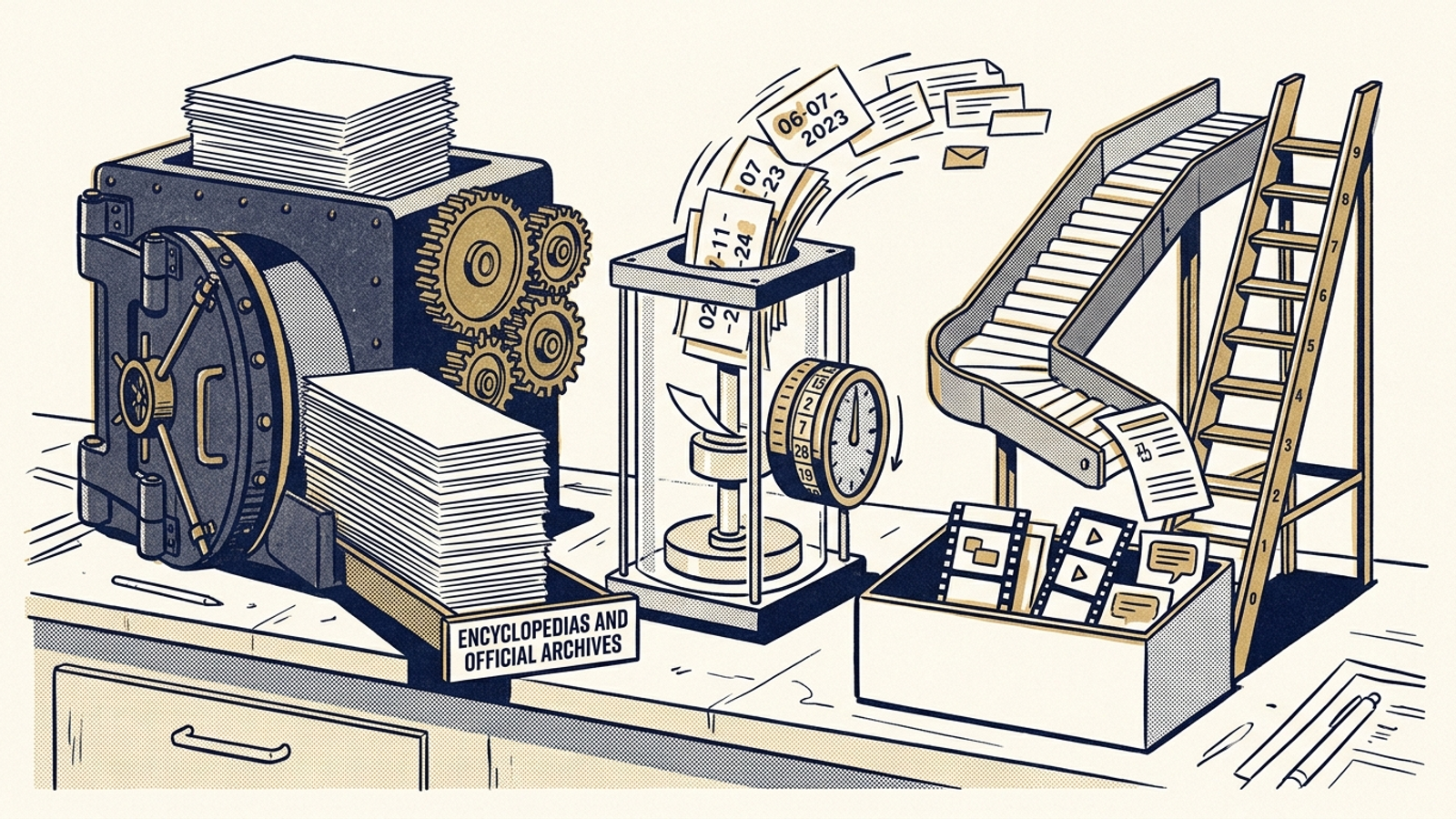
| Decision | Perplexity | ChatGPT | Google AI Overviews |
|---|---|---|---|
| How to get considered | Publish a direct answer that its live retrieval can find and extract | Build visibility in sources it relies on, while making your pages available to search and live browsing | Make relevant pages useful within Google’s search index, including answers to narrower sub-questions |
| What to update first | Fresh comparisons, specifications and documentation | Accurate product pages and credible third-party coverage | Existing pages that answer search intent clearly |
| What can keep you out | A vague page that makes the answer hard to extract | Limited recognition beyond your own site | Assuming a top organic position guarantees a citation |
| What to measure | Citations alongside the claims you want to own | Brand mentions, linked sources and live fetches as separate signals | Whether an Overview appears, which pages it cites and what traffic follows |
That table is a starting position, not a promise that every query behaves alike. Here is where I would put the hours, axis by axis.
Axis 1: How does your page get into an answer?
Perplexity is the clearest first shot for a page built to answer a specific question. It runs queries against web indices, retrieves candidate pages and extracts passages for a sourced response. If a buyer asks for a comparison and your page gives the relevant difference without four paragraphs of throat-clearing, the retriever has something usable. Research compiled by Plugin Useful reports a 13.8% brand citation rate for Perplexity versus 0.7% for ChatGPT in its comparison. Those are study-level rates, not the odds that your individual page will be cited, but the gap is hard to ignore when choosing a first experiment.
ChatGPT is a less direct bet. OpenAI documents separate agents, including OAI-SearchBot and ChatGPT-User. The former is associated with search indexing; the latter can fetch a page for a user-initiated request. A live fetch gives ChatGPT access to a page. It does not guarantee that the answer names your brand, links to you or uses that page as its source. Outside live retrieval, established third-party sources can weigh heavily: Pingprime’s source breakdown puts Wikipedia at 47.9% of ChatGPT’s top citations in its dataset.
Google AI Overviews works within Google’s search infrastructure, but a conventional top ranking is no admission ticket. Ahrefs’ analysis of 863,000 keyword SERPs and 4 million AI Overview URLs found that 37.9% of cited URLs ranked in the organic top 10. Another 31.2% ranked from 11 to 100, and 31.0% came from beyond position 100. I would not abandon organic search to chase an Overview. I would stop treating a top-three ranking as a guarantee that the Overview will use the same page.
Practical call: if you can make one page more useful this week, choose a precise buyer question and answer it plainly. Then check which engine, if any, actually cites it.
Axis 2: How much does freshness buy you?
For Perplexity, freshness is a reason to keep useful pages current rather than let last year’s comparison sit untouched. Pingprime reports that content under 30 days old earns 3.2 times more Perplexity citations than older assets in its data. That does not make a date stamp a strategy. A current pricing explanation, technical distinction or product comparison gives a live retriever something worth pulling because the answer has changed or become more specific.
Google AI Overviews brings a different dependency: Google has to discover and process the page or its update before it can draw on it. ChatGPT has multiple routes to an answer, so an updated page alone does not tell you when, or whether, the answer will reflect it. Do not sell either platform to your team as a guaranteed 48-hour publishing loop.
Our edge logs make the measurement problem concrete. Over a recent 30-day window, the groas homepage received 753 fetches from ChatGPT-User and 48 from Claude-User. Those counts tell us that the agents requested that page at different rates. They do not tell us which prompts led to the requests, whether either assistant cited groas, or how often it answered from other sources. I still want that log beside a citation report: a requested page and a cited page are two different events.
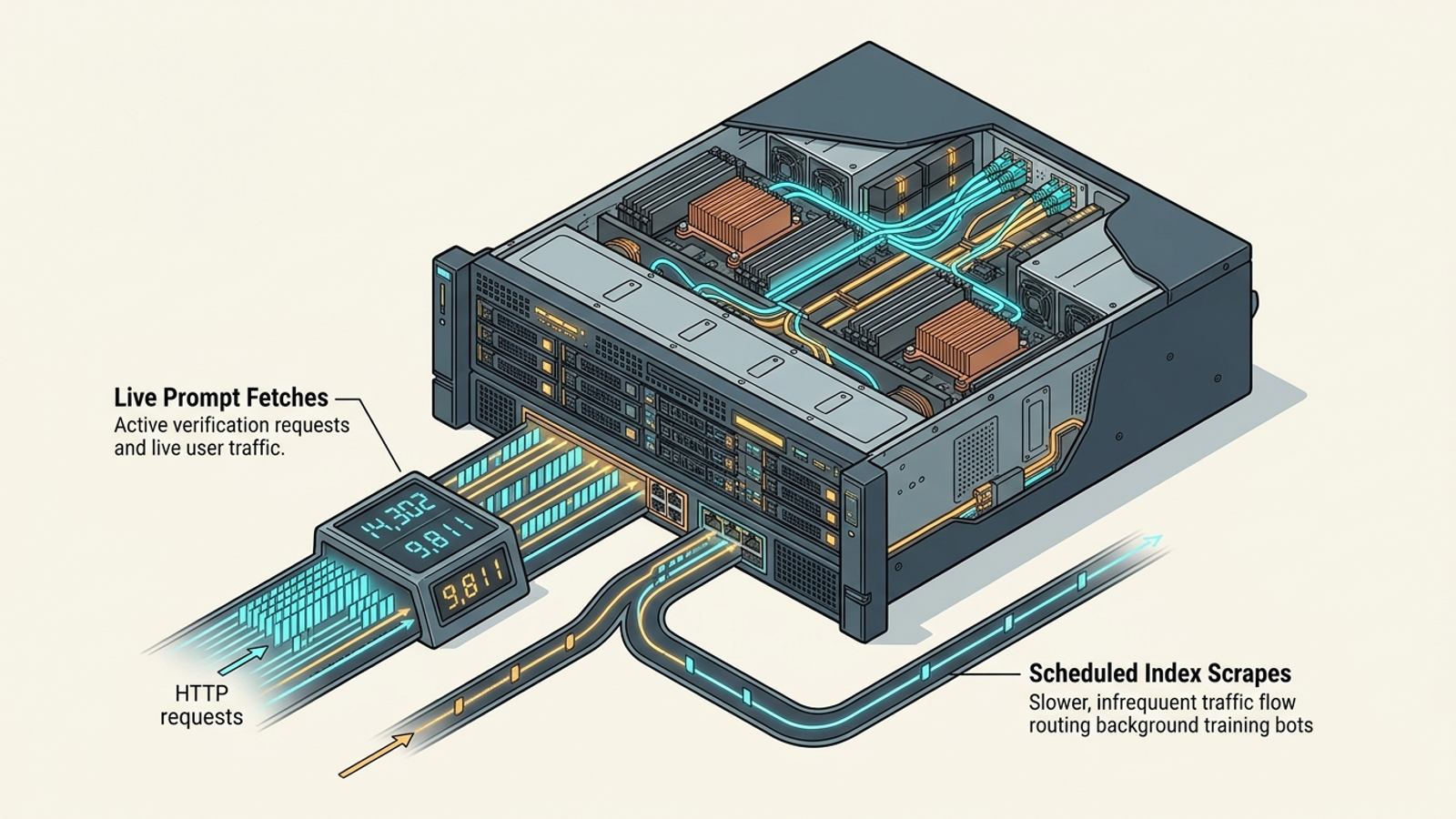
Practical call: update pages when you have a better answer to publish. Use server logs to see whether an agent fetches them, then inspect answers separately to see whether the work earns a citation.
Axis 3: Which sources does each engine seem willing to trust?
Perplexity’s appetite for direct answers does not mean every citation goes to a polished brand site. Pingprime’s breakdown puts Reddit at 46.7% of its citations. That is a useful warning to anyone who thinks adding a tidy FAQ to an otherwise thin product page will settle the matter. If a forum thread answers the buyer’s real question more directly, the thread has an opening.
ChatGPT gives a smaller vendor a different obstacle. The Wikipedia share in Pingprime’s dataset suggests how much prominent, established sources can occupy the available slots. I would make product pages accurate and accessible, but I would not plan a quarter around the assumption that publishing more self-description makes ChatGPT recommend the business. A third party explaining what you do may be more valuable than another paragraph on your own homepage.
Google’s mix is broader than a list of blue links. The cited Ahrefs analysis shows how far beyond the organic top 10 its AI Overview sources can reach. Omnibound’s collection of industry data also reports wide variation in top-10 overlap by vertical: 75.3% in Healthcare, 71% in B2B Tech and 22.9% in Ecommerce. If you sell across many product attributes, that last figure is a good reason to inspect the actual Overview sources rather than assume your category page will carry every answer.
The work here is less mysterious than the term AI optimisation makes it sound. Put the comparison, specification or constraint where a reader can find it. A self-contained paragraph or table can answer a sub-question without requiring an engine to piece together your point from 600 words of brand philosophy.
Practical call: inspect the cited URL, not just the cited domain. The page and the passage tell you what answer won.
Axis 4: Will the citation bring a buyer to your site?
A citation is not a visit, and a visit is not pipeline. This matters most when someone proposes replacing lost organic sessions with an AI citation target. Pew Research findings reported by Omnibound show organic result clicks falling from 15% to 8% when an AI Overview appears; only 1% of users clicked a link inside the Overview. Getting into the box may help a buyer recognise you, but it is not a one-for-one traffic replacement.
Perplexity places numbered sources near its answer, giving readers a visible route to the underlying page. ChatGPT’s links can be less prominent. Google AI Overviews sits directly above or alongside the search experience where you may already be competing for an organic click. Those interface differences affect what I would measure: not merely “Were we mentioned?” but “Was the right page linked, did anyone arrive, and did qualified enquiries follow?”
For a marketing team with a pipeline target, I would report three separate columns: mentions, citations and downstream outcomes. Combining them into one visibility score makes a pleasant deck and a poor decision tool.
One afternoon test: which engine gives you a real opening?
I would run a 20-prompt baseline before paying for a broad monitoring programme. This is a prospective test, not a claim that every business will see the patterns above. The question is simple: When a qualified prospect asks about your category, does each engine name your brand, cite your domain, cite someone else discussing you, or choose a competitor?
Set up the prompts and controls
Build 20 bottom-of-funnel prompts. Keep the wording the same when you take each prompt to ChatGPT Search, Perplexity and Google:
- Five competitor comparisons: for example, “Vendor A vs Vendor B for mid-market.”
- Five pricing questions: for example, “How much does [category service] cost in 2026?”
- Five capability or integration questions: for example, “Best [software or service] with [specific requirement].”
- Five problem-resolution questions: for example, “How to fix [specific operational failure].”
Skip “What is [Company Name]?” A branded lookup tells you little about whether you appear when someone is still choosing. Run batches in fresh private sessions, turn off ChatGPT’s personalised memory, and keep your test location consistent. Those controls will not make the engines identical. They make your own comparison less noisy.
Record what actually happened
For each prompt, note whether the brand appears in the answer, whether your domain receives a link, and which third-party URLs take the citation slots. For Google, first record whether an AI Overview appeared at all. No Overview is not a failed citation inside an Overview that never existed.
That gives you up to 60 answer observations across three engines, not necessarily 60 AI-generated responses. Keep brand mentions separate from linked citations. Keep a third-party page that mentions you separate from a link to your own domain. If you have access to server logs, check relevant agent requests too, but do not turn a fetch into a citation on the spreadsheet.
My expectation is that the gaps will differ by engine. Perplexity may reveal specific questions a direct, current page could answer better. ChatGPT may favour established third-party sources. Google may cite a narrower page or a community source instead of the category page you expected. Those are hypotheses to check against your results, not marks you should fill in ahead of time.
Decide what the result changes
Sort missed citations by the buyer question and the URL that won. If a cited page answers an implementation-timeline question in its first useful paragraph while yours hides the answer beneath company philosophy, fix yours. If another source wins because it provides a comparison your site avoids, decide whether you can publish an honest one. The DIY AEO citation playbook offers a cadence for turning those gaps into page work.
If your page is fetched but not cited, work on the answer before buying more AI prompt tracking. If your brand is mentioned without a link, measure that as a mention. If neither happens, you have learned which engine and question are worth testing next. That is a better outcome than paying to watch a single blended “AI visibility” number move.
Verdict: Perplexity wins first for the lean specialist
For a lean B2B team selling a specialised service or complex product, I would work on Perplexity first. Its live, sourced answers give a fresh, specific comparison or technical page a direct job to do. The cited brand-rate comparison supports testing that opening before committing the same hours to direct ChatGPT citation work. It does not promise that every good page will win.
Pick Google AI Overviews instead if you run a local service business or a high-SKU ecommerce operation where geography and product attributes shape the buyer’s search. You already need to make those pages useful in Google’s index; inspect the Overview citations as part of that work. In that situation, Perplexity is the weaker first use of a small team’s hours.
Pick ChatGPT first if your immediate question is whether buyers already ask about you there and what sources shape the answers. Run the baseline and make sure your product information is accurate. I would not make direct ChatGPT citations the main publishing target for a smaller brand on the strength of a generic checklist.
This is also where groas fits. Its paid and organic search models handle ongoing campaign and content work while a human strategist sets direction and owns the pipeline target. That is a better operating model than paying for a polished report that rolls three distinct citation problems into one score.
Start with the 20 prompts. Find the engine that already has a place for the answers you can give, and make those answers impossible to miss. If the test points somewhere other than Perplexity for your buyers, change the order of work. Do not go back to optimising for an imaginary single AI search engine.